Chapter 2: Unsuccess
I attempted suicide in March of 2022. It is not a tremendous or harrowing story. In a fit of mania, I left my parents house after packing a small bag, cursing them unintelligibly, and taking as much cash as I could. I was 32 years old. Of relevance: in the bag I packed some medication. This was not, at the time, a plan for the inferno, I simply thought I would need it for my impromptu travels, to stay healthy.
I boarded a train for San Diego. In that town, there is a short bus ride between the train and the airport. I got in a fight with the bus driver over something I can’t remember, and instead of letting me on the bus, he pushed me backwards and I fell hard back on the concrete. Embarrassed and angry, I attacked him, though he dispatched me again easily. So I determined to walk to the airport, thinking I’d buy a plane ticket for whatever was departing soon.
During the walk, I had the Mersault experience, a La Entranger. Something about it all got to me: the beautiful sunny day, the cool breeze off the ocean, but most of all, the other people walking around, the ease at which they went about, couples so carelessly with one another, strollers wheeled with purpose. I felt so very far away from them, that I could never have what they have. What was simple for these other figures, to love one another, to procreate, to dress in light clothes and to enjoy a little life on earth, it seemed unobtainable to me. I hated them. I hated everything. I hated the sun and the sky and the shine off the nice buildings and clean fronts. My God, some of these assholes going by me were jogging for exercise of all things, right past deranged bus stop deviants, no less. I did not know how to become a jogging asshole, nor did I have the courage debase myself as the street deviants. There seemed no place for me, and a ticket to anywhere was futile.
I took a fast handful of the pills I had, and continued walking. Then another handful. Since one of the prescriptions was a typical downer, I had not reached the airport before an immense calm took over me, and laid me down on a grass clearing off the harbor. I realized that prior to this overdose of calm that my thoughts had been abnormally chaotic and fast all morning, and that now I was more sensible, but probably dying.
At this drugged point of reasonableness, I was physically incapacitated, lying fetal on the cool green grass, only able to take some shallow breaths. A kind of regret shot through me that I was unfamiliar with. I did not regret my life—that sort of thinking I knew quite well, but instead I regretted my overdose, my death and my hasty decision with the pills. I wanted to live. For some time I lay there. People even passed by, and I felt too weak to cry out for help.
Through sheer providence, the dose I consumed was simply not enough to kill me, and after a couple hours I was merely very ill and able to call my mother, who picked me up.
I was not grateful for life the day after, or the day after that. Or for many days, to tell you the whole truth. The burden of being alive still weighed on me like a postal amount of problems, a lot to sort through and very many things I felt could never be sorted at all. Oh my ingratitude! I had survived the mildest of attempted suicides with all my physical health intact! When I was in high school I recall a legless motivational speaker who had jumped in front of the same train line I took earlier that ugly day!
But thinking that things could always be worse is never fruitful, somehow. Nor do I fear that any of you lack motivation (other than the potheads among you, you do lack motivation).
And when, like today, I feel so much gratitude for life, it does haunt me a little bit that such lows seem an inevitable part of the cycle, that I might one day again curse God in the confines of a psych ward, that in spite of any of the accoutrements of civility I’ve acquired in recent years, there lurks a lunatic underneath them.
It is vain to construct a sharp lesson out of this experience. But I am convinced of appreciating good times. Life will get bad, and good, and bad, and good, and so on. You are the sorriest man alive if you don’t know the difference. I don’t endorse or oppose anything in the way of mindfulness, religion, or psychiatry, as some readers might lurch to advise me of. These might help. Ingratitude comes for the god believers just as well as the atheists.
And there are some readers who can’t even imagine trying to end their own lives. I only mention this last bit to the others, who know in their statistically impractical make-up they are at risk for such nightmares:
I had previously believed my danger for self-harm was during low depressions, when in fact it was the reverse—a day of high energy and rage, wherein an impulse overwhelmed me. There was no plan, no pre meditation.
Just a bad run.
Chapter 3: Details of Backing Up
It’s all in the mirrors. The only bit of headturning you should do is to survey the surroundings generally, as stated in chapter 1: to peep any pedestrians behind you, or other cars, surprise obstacles, etc… I assume you are going to park any car at a reasonable and safe speed. This may be a dubious assumption. Valet companies make a dim mistake in often hiring the aforementioned subculture of “car guys,” and, ironically, car guys are fairly bad at driving. They move too fast. It’s called a “claim” in the valet industry when one of our employees damages a guest vehicle. After ten years of experience on this job, an objective platitude I wager nothing but gray haired coolness on—valets who drive too fast through the lot always end up crashing disastrously. Once in a while they make the local news flying a fancy vehicle off a second story garage.
So you’re in the car, you’ve looked backwards once and there’s no outstanding obstacles between you and the parking space. Now your head should be forward, and you’re going to entirely rely on the mirrors. The two side mirrors in particular. As you crank the wheel to come into the spot, reversing smoothly, look into the mirror on the same side as you are cranking the steering wheel. That is to say, if cranking left, the left mirror, if right, the right mirror. This vision will show you the approach best. As the car ellipses into the space, you may find yourself incredibly close to the line or car parked next to you. You’re doing it right if you are.
You can wiggle into a central parking position once you’ve cleared the obstacle/line. Like managing a clutch, there is an angle where it is impossible for you to collide with the car next to you, and there are other angles where you assuredly will hit it, but like finding that catch point of a clutch, you can be perfectly confident when you’re in the safe zone.
There is no shame in re-positioning if you’ve missed a tad. A parked car sits for days or hours. The act of parking is only moments. Get it right.
A note about backup cameras: these are nice inventions, but, in terms of parking, they are really only good for one thing: seeing the last moment of your parking endeavor—the area behind the car at the final stopping point. If it’s a wall behind you, fantastic, use the camera to stop short of the wall. Beware that certain vehicles, Jeeps and Range Rovers namely, also G-Wagons, have a spare tire on the back that are not visible on your back up cam, and these will strike a wall if you live by the camera overzealously.
Be sure the wheels are straight before you leave the car. I have yet to apologize for a ruthless insistence that cars ought to be backed into spaces. Allow me to innumerate:
Leaving swiftly is more important than arriving.
You will aid the traffic flow of the worldwide and cosmic parking lot by being able to depart faster, especially if someone waits on your space. It is conscientious of other people to park this way.
In the event your car dies, it will be easiest to get under the hood if you’ve backed in.
Of note, don’t back into a parking space if the lot has one way streets and angled spots. Trust and believe in the architects of this world, and what lines they’ve painted. I cannot preach with practical and specific instructions much to this point, except to say that for most places, someone has thought hard about how things ought to operate, and you should do your best to follow instructions. Very rarely is a novel approach advised: keep in mind that even an unaffected passer by will scoff and curse the moron who makes an out of line (parking) decision. To the man or woman who intentionally blocks multiple spaces, there is little mercy.
Chapter 4: Useless Theories
Probably there is such a thing as useless information. When I crane for examples of this, my formal education comes to mind. I did well and spent a great sum in college, but my training academically does nothing to aid my prosperous abilities as a valet. Sure, I could wax long and tediously about why there are no lady valets, how the systems of my era produce gendered customs to the disadvantage of womankind who wish to valet, and that my participation in the field upholds the established values, or antithetically it must be considered that women and parking garages are natural adversaries sexually.
I should’ve known college was mostly grift based on the parking situation. Where I attended, they had huge plentiful lots, no shortage at all for parking, and yet they charged through the nose for the privilege to rest a vehicle on their lots. The savage institution that is my alma mater even charged faculty for parking. And again, I swear to you, there was not a shortage of space, but like most universities it was constructed somewhat away from any alternative culture, and the protestants like me who parked off-site and hoofed it had to do so from about a mile away.
These days I am wary of any locale that extorts you for parking. Some may find this a contradiction coming from a professional valet. However, I have on several occasions turned down working at valet locations on the basis of ethics. If I believe the valet is more nuisance than service at a particular site, I won’t work there. Some valet stands are completely unethical, and their staff is lying right to your face, or omitting how easy it is to park elsewhere. I once worked a location where the lot next door was a tad cheaper than our rate, and not too far. I never hesitated to elucidate this fact to guests. The regional vice president of the hotel spied me telling an arriving guest about this information. After my interaction with the guest, the vice president came up to me and directed me to state valet was the only option to future guests. Were it not for the many workers I knew over the years at this location, I should wish the whole company goes belly up and its founders damned to park roachmobiles in hell for eternity.
Most people don’t want to valet their car, when it comes down to it. I am a service worker that people don’t want to see, and a very peevish and small one at that. I assure you, there are many parking garages where my service is necessary, or immensely helpful. I have not had to personally exercise for a decade because I get plenty of running and stairwells on my job, and my broad analysis of the American physique leaves me skeptical the average hotel guest would be unwilling to pay for my speed.
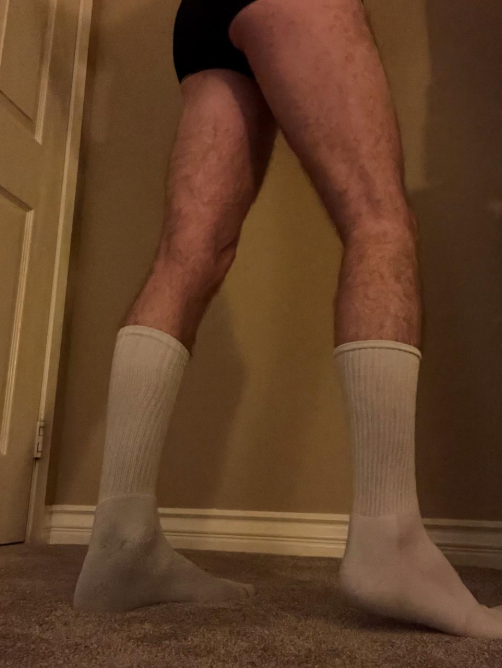
Figure 1 My Valet Ass
Some garages I’ve worked plainly would not function if the public parked themselves. Hopefully this book doesn’t sell too well, because the basic reason valet exists today is because left to their own parking, the general public’s coordination and agreement with other cars is embarrassing, selfish, and tragic. Any real line of work in this life is usually in one form or another sorting chaos into order.
Lastly, the car garages in hotels are usually underground. On a Sunday morning, the whole thing reeks of human excrement, and this is because everyone in the hotel is taking shits before their departure at 11. If you absolutely hate valets, rest assured that we will put up with your shit, so you don’t have to.